Schruns
A Moveable FeastSchruns is the Austrian mountain town where Ernest Hemingway, Hadley Richardson, and their infant son, Bumby, settle after the winter cold and poverty of Paris become too much for their young family. The town offers warmth, space, and a strikingly economical way of living; for Hemingway, it also joins daily work and mountain journeys to a temporary sense of domestic happiness. Their stay becomes a decisive interval between the early Paris years and a return to a city that, as the memoir puts it, was no longer the same.
Setting and Route
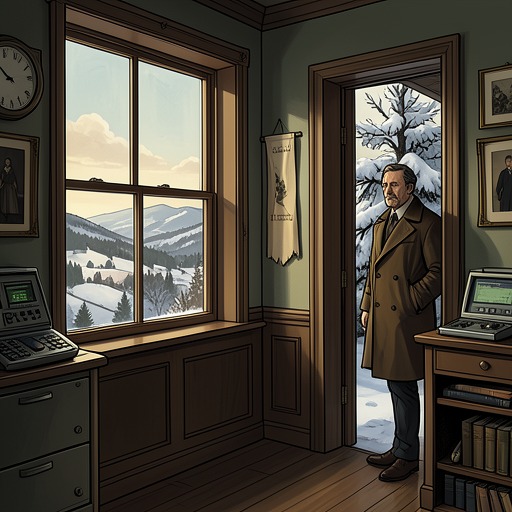
The family reached Schruns by train after crossing Switzerland and entering Austria at Feldkirch. The train passed through Liechtenstein and stopped at Bludenz, where a branch line followed a pebbly trout river through a valley of farms and forest. Schruns stood at the end of that route as a sunny market town, with sawmills, stores, inns, and the year-round Hotel Taube.
The valley’s open aspect and reliable sun contrasted with the cold Paris winter. The Taube provided a settled base rather than a temporary mountain shelter: the family lived there while Hemingway worked and they made trips into the surrounding country. Schruns therefore functioned both as a place of residence and as a point of departure into the high valleys.
Household and Economy
The Hotel Taube’s rooms were large and comfortable, with big stoves, windows, and beds, and good blankets and feather coverlets. Its meals were simple and excellent; the dining room and wood-planked public bar were well heated and friendly. The pension cost about two dollars a day for all three family members, and the falling Austrian schilling made their room and food progressively cheaper. Inflation affected the cost, but the account distinguishes Schruns from the desperate poverty and inflation Hemingway had known in Germany.
The move followed a period when the family was really poor and Paris, in winter, was too cold for Bumby. The change of setting answered an immediate domestic need without requiring a costly way of life. At the Taube, warmth, adequate space, and inexpensive meals made family life more manageable while leaving Hemingway able to continue working.
Books, Work, and Mountain Travel
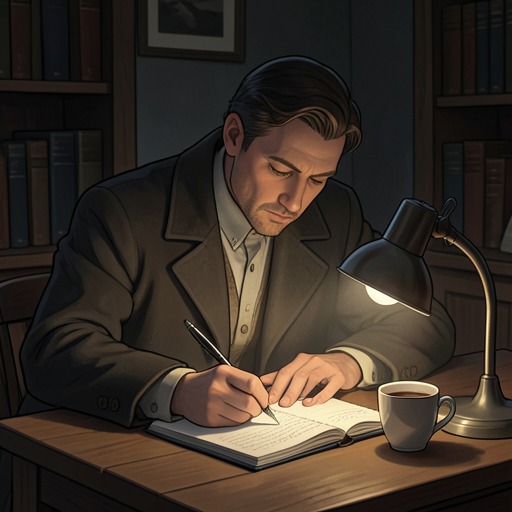
Schruns also belonged to the family’s portable world of reading. Hemingway recalls carrying books through travels in Switzerland and Italy until the family found the town; during the day, their world was the snow, forests, glaciers, and the practical problems of winter shelter, while at night Russian literature opened another world. The books made intellectual life continuous across changing landscapes, rather than something confined to Paris.
That continuity could not be taken for granted. When the family ran out of books during a trip at Schruns, Hemingway could not bring himself to reread Crime and Punishment. He read Austrian newspapers and studied German until they found some Trollope in a Tauchnitz edition. The episode makes the place more than a picturesque retreat: its distance from the literary resources of Paris could be felt in the ordinary problem of what remained to read.
There were no ski lifts or funiculars at Schruns. Logging and cattle trails led upward into the mountain valleys, and skiers climbed with seal skins attached to the bottoms of their skis. High in the valleys stood Alpine Club huts used by summer climbers, where travelers could sleep and leave payment for wood. On longer tours into the high mountains and glaciers, supplies and wood might have to be carried up or taken by a hired porter; the Lindauer-Hütte, Madlener-Haus, and Wiesbadener-Hütte were among the best-known base huts. This network of trails and shelters connected the family’s settled hotel life to a more demanding mountain world.
Return and Narrative Significance
Hemingway recalls that in Schruns he worked well and that the family made great trips. While they were alone there, he thought they were invulnerable again. That happiness was real but temporary: only after they left the mountains in late spring and returned to Paris did the other trouble begin again. The account does not name that trouble in this passage, but makes the change in place and the change in their shared condition unmistakable.
The return marks the end of the first part of Paris. Hemingway says that they never went back to Vorarlberg, and that the rich did not return either. Schruns thus remains a bounded interlude in the memoir: a place where family life, work, books, and mountain travel briefly held together, but not a permanent alternative to Paris. Its significance lies in the contrast between the cold, difficult city they left and the warm, inexpensive interval whose memory could not restore the earlier Paris when they came back.